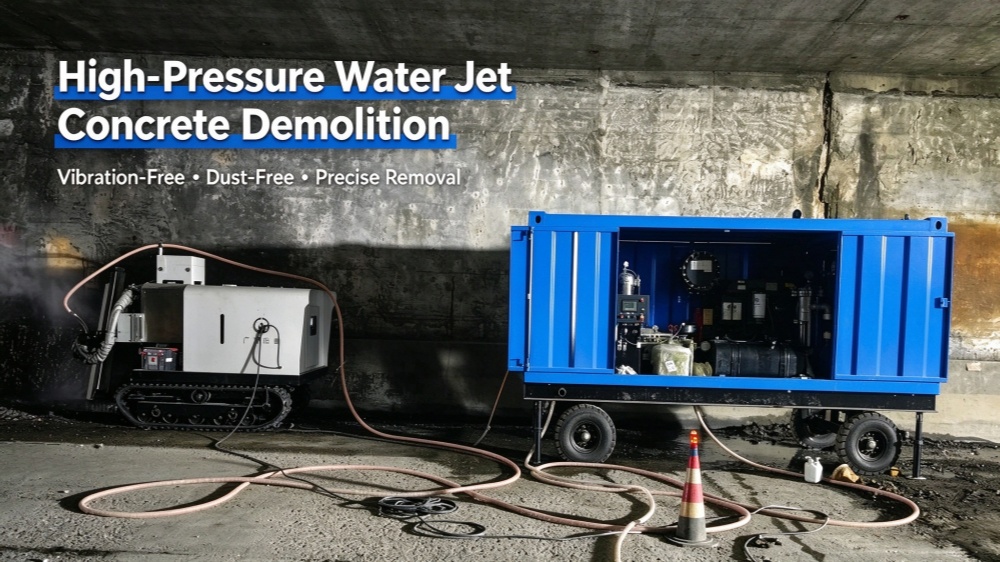
Urbanization keeps growing. Meanwhile, offshore engineering projects also expand rapidly. As a result, pile foundation construction meets more and more complex challenges. Dense urban areas set strict rules for construction vibration and noise. Besides that, tough ground conditions bring trouble for traditional piling work. These conditions include thick sand layers, gravel and weathered rock. Fortunately, high-pressure water jet assisted piling offers a creative solution. In short, it uses fast water jets to change soil status around piles and solve these construction problems.
Technical Principles: The Interaction Between Water and Soil
The core idea of this technology relies on kinetic energy from fast water jets. Specifically, the jets change the physical and mechanical features of soil. Specially designed nozzles sit at the pile tip or pile side. Typically, they spray water at pressures of tens of megapascals. In total, three key effects happen:
- Reduction of Tip Resistance:
- Injecting high-pressure water near the pile tip increases pore water pressure between soil particles. As a result, dense soil “fluidizes” and creates a temporary state where soil particles can easily rearrange. Consequently, this process significantly reduces pile tip penetration resistance.
- Reduction of Skin Friction:
- High-pressure water flows upward along the pile shaft. In turn, it creates a lubricating layer at the pile-soil interface and effectively reduces side friction. Meanwhile, the water flow prevents soil from entering and compacting within the interlocks, further reducing resistance.
- Cutting Through Hard Strata:
- Lastly, for tough ground conditions such as gravel layers, dense sand, and even weathered rock, high-pressure water jets function as cutting tools. After that, they break through hard layers and create pathways for pile penetration.
Key Equipment and System Design
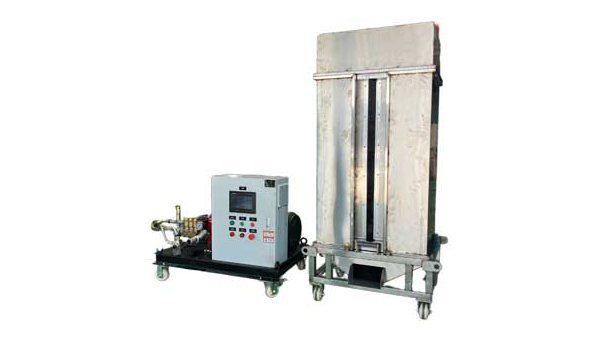
Modern high-pressure water jet assisted piling systems have evolved into several mature technical solutions:
1. Central Transmission Pipe with Peripheral Nozzle Configuration
This patented design uses a central pipe along the pile centerline. Several water pipes sit evenly around the pile. With this layout, the central pipe has one nozzle at its bottom. Surrounding pipes carry extra nozzles. Together they create 3D jet coverage. Moreover, this setup reduces friction between steel pipe piles and soil. Operators can adjust pump pressure to change jet cutting force. It works well for different soil types.
2. Self-Rotating Water Jet System
Normal nozzles often focus water in one narrow spot. To overcome this limit, researchers developed self-rotating nozzle technology. Nozzle chambers use offset positions and horizontal angles. Hydraulic force spins the nozzle automatically. Therefore, rotating jets deliver strong cutting power to break soil. At the same time, they spread lubrication evenly across the pile-soil interface.
3. Prestressed Concrete Pile with Dedicated Water Jet Channels
Concrete piles can come with built-in flow channels. These channels run along the pile body. Openings sit at the pile tip. When needed, operators pump high-pressure water or cement grout through these channels. The water helps pile driving. Once the pile hits the target depth, crews can pump grout through the same channels. Grout forms an enlarged base. This raises the bearing capacity of a single pile.
Engineering Advantages
- Significant Reduction in Penetration Resistance
- Field data demonstrates that water jet assisted technology can reduce penetration resistance by 60-80% in sandy soils. For example, GBM Works’ Vibrojet® technology, tested in North Sea sandy seabeds, achieved penetration depths three times greater and speeds four times faster than conventional vibratory hammers.
- Low-Noise Construction
- Traditional impact hammer piling generates noise exceeding 100 dB, significantly impacting marine mammals and urban residents. In contrast, water jet assisted technology substantially reduces construction noise. Vibrojet® testing indicates that combined vibration and water jet methods significantly reduce strain levels in piles. As a result, the expected substantial noise reduction may remove the need for traditional bubble curtain mitigation measures.
- Overcoming Challenging Geological Conditions
- In strata containing gravel, boulders, or shallow bedrock, conventional piling methods frequently encounter “refusal.” Fortunately, high-pressure water jet assisted technology effectively addresses these obstacles through pre-drilling or water jet cutting. Furthermore, this technology has demonstrated excellent performance in glacial till and outwash deposits across North American and European river and harbor projects.
- Enhanced Construction Accuracy
- Additionally, when combined with template frames for panel driving, water jet assisted technology significantly improves pile verticality. It cuts down uneven resistance between pile and soil. Therefore, pile deviation and twisting are substantially minimized. In real projects, this technology has achieved finished wall plumbness within 1:200.
Technology Trends
- Intelligent Control:
- Modern jet systems move toward smart automatic operation. To achieve this goal, engineers install accelerometers, pressure gauges, flow meters and strain sensors. Data platforms feed live readings to operators. It acts like “underground eyes” to watch the whole piling process.
- Multi-Functional Integration:
- Combining jetting and grouting is a major development trend. In other words, the same flow lines help drive piles. They can also pump base grout to build enlarged pile tips. One system serves two key purposes.
- Environmental Sustainability:
- Environmental rules get stricter year by year. Accordingly, low-noise and low-vibration features become more valuable. Advanced systems can keep noise below 70 dB. They meet the rules for sensitive urban zones.
Conclusion
High-pressure water jet assisted piling changes pile foundation work completely. Construction shifts from brute hammer impact to controlled, smart guidance. Essentially, water reshapes soil around piles. It solves hard piling problems in complex ground. It also meets strict environmental limits. Looking ahead, smart control and multi-function designs keep improving. Water jet assisted piling will play a bigger role. Ultimately, it supports urban construction, offshore works and transport infrastructure projects.